


For long-term investors, the health of the economy matters because it has a direct bearing on their portfolios and financial goals. Recent data releases have painted a mixed picture, leaving many investors uncertain about how to interpret the current landscape.
That said, just as a physician relies on multiple indicators rather than a single reading to assess a patient’s health, investors should resist drawing sweeping conclusions from any one data point. Blood pressure, heart rate, and other metrics each contribute to a fuller picture, and what qualifies as healthy can differ from person to person. In the same way, payrolls, inflation, and GDP are all vital signs that together offer a comprehensive economic assessment. These signals naturally shift over the course of the business cycle, and a range of different economic environments can still support long-term portfolios and financial objectives.
Taken at face value, today’s headline numbers look largely encouraging: GDP growth has exceeded expectations, inflation continues to slow, and unemployment remains low by historical standards. The labor market, however, tells a more nuanced story. While the most recent monthly data were positive, hiring over the past year proved considerably weaker than originally reported. For long-term investors, the key lies in understanding how these data points fit together to form a broader view, rather than reacting to any single release.
The labor market is at an inflection point
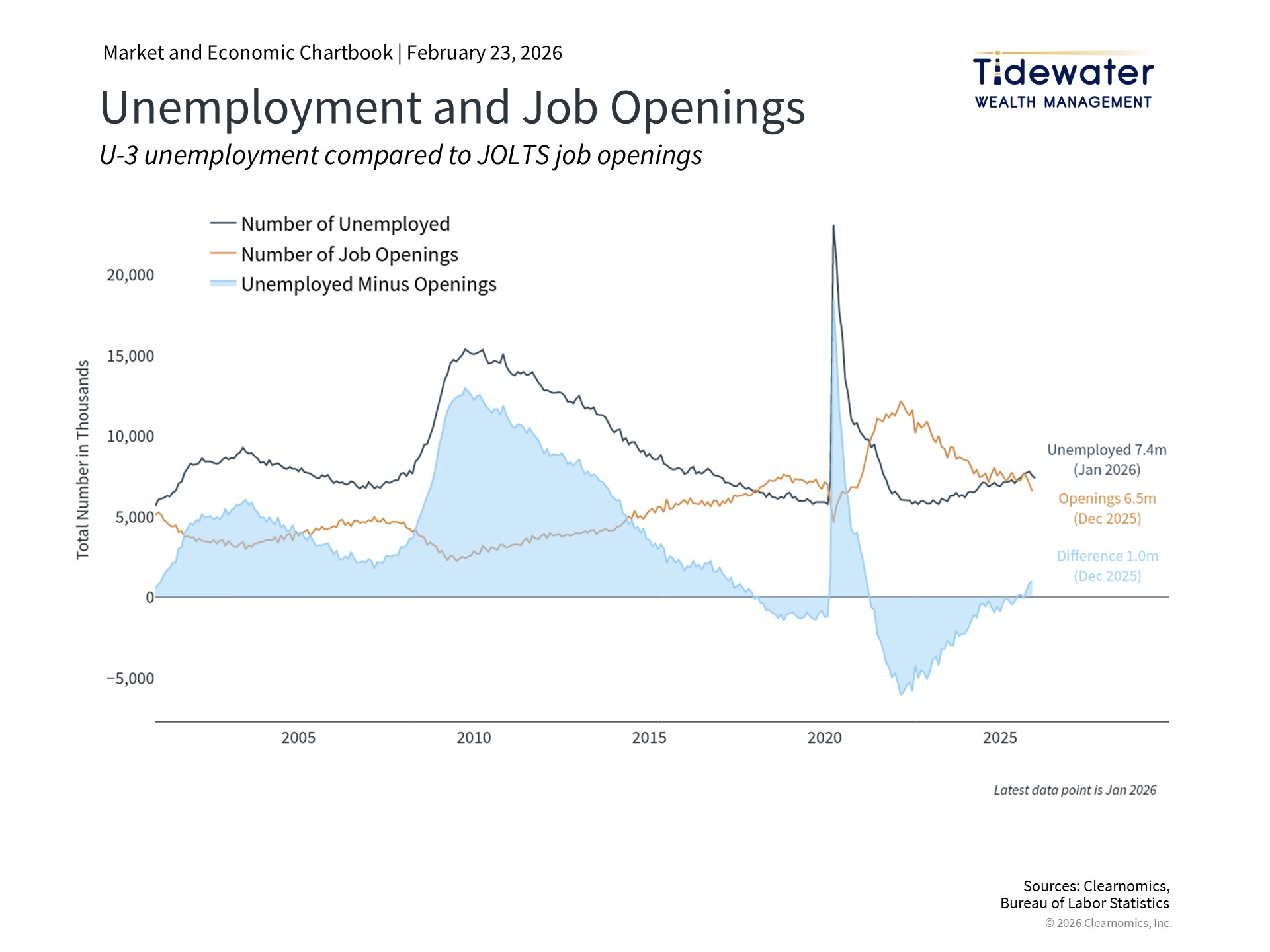
Interpreting labor market conditions has been particularly difficult in recent months, owing to government shutdowns that delayed data releases, adverse weather, and other disruptions. For workers and job seekers alike, perhaps the most meaningful development has been the shifting balance between the number of open positions and the number of people looking for work.
As shown in the chart above, the post-pandemic period saw several years during which job openings outnumbered unemployed individuals. This ratio remained above one from mid-2021 through last summer, peaking at roughly two positions per job seeker in 2022. Today, approximately 7.4 million Americans are unemployed while only 6.5 million job openings exist—the fewest unfilled positions since late 2020.
Even so, the January jobs report delivered an encouraging surprise, with the economy adding 130,000 jobs that month—nearly double what economists had anticipated. These gains were concentrated largely in health care, social assistance, and construction. The unemployment rate edged down to 4.3% from 4.4%, remaining near historically low levels. Viewed in isolation, this could suggest that the labor market is beginning to stabilize.
Despite these positive figures, the broader trend has been more subdued. The Bureau of Labor Statistics’ annual revisions—based on more comprehensive data than was available during monthly reporting—revealed that total job creation over 2025 amounted to just 181,000, or roughly 15,000 per month, making it the weakest annual total since 2020. For context, prior to these revisions, healthy job growth had typically been measured in the millions per year.
So why has the overall unemployment rate held relatively steady despite slower hiring? Part of the explanation lies in demographic trends and immigration patterns. The Census Bureau recently reported a historic decline in net international migration, which dropped from a peak of approximately 2.7 million in 2024 to around 1.3 million in 2025, with further declines anticipated. At the same time, an aging population and reduced labor force participation mean that fewer people are entering the workforce. In effect, both supply and demand in the labor market are softening simultaneously, which has helped prevent a more pronounced rise in unemployment.
Jobs, inflation, and the broader economy
Investors pay close attention to the labor market in part because it is more tangible than many other economic indicators. Jobs have a direct impact on household income, consumer confidence, and spending behavior. Since consumer spending accounts for more than two-thirds of U.S. GDP, developments in the labor market ultimately flow through to the broader economy.
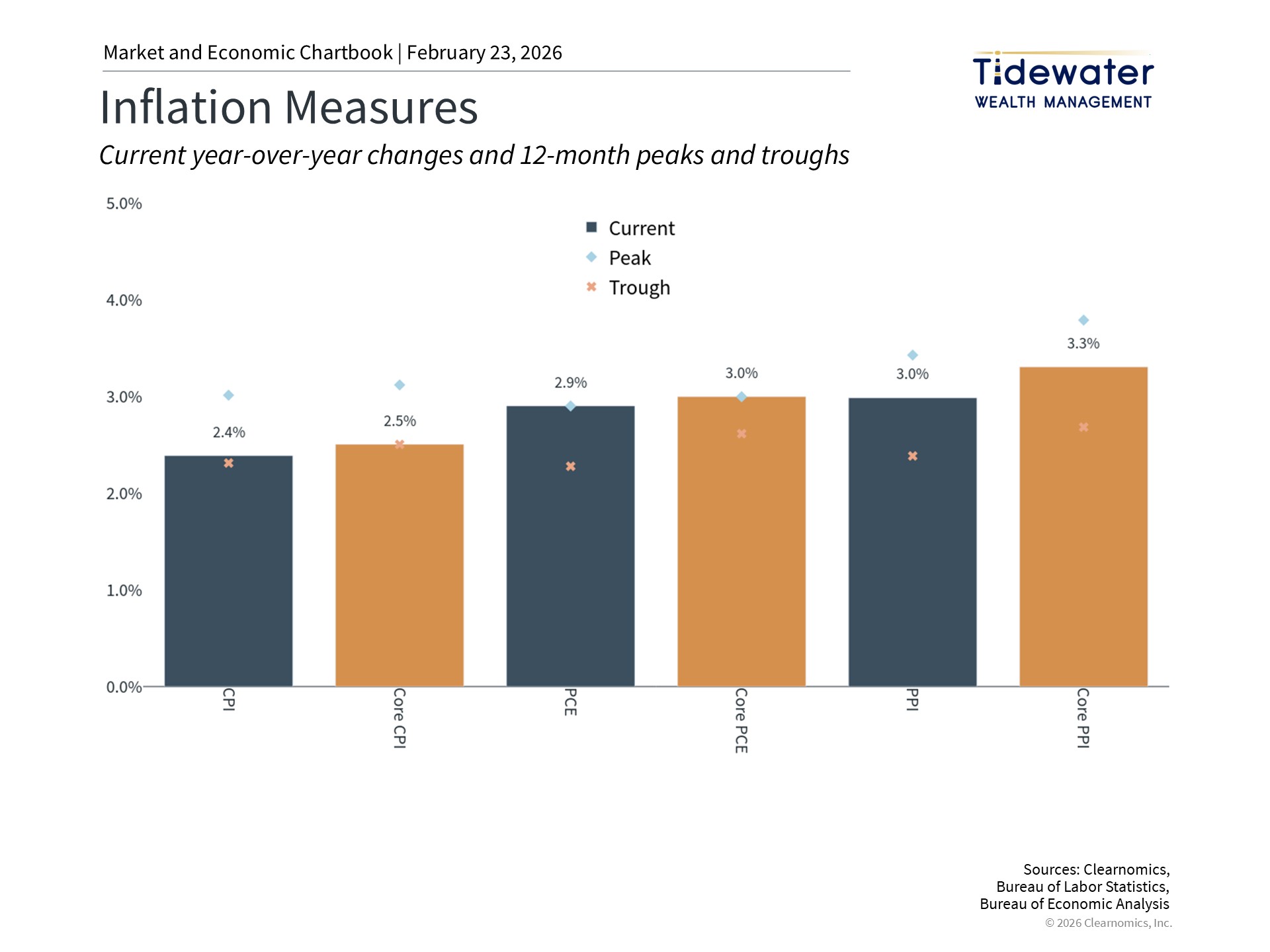
That said, employment is only one piece of the puzzle. Other indicators, particularly inflation, suggest that the glass may be at least half full. Until recently, inflation was the foremost concern for investors and policymakers. The latest data show that the Consumer Price Index rose just 2.4% over the past year, while core inflation—which strips out food and energy prices—slowed to 2.5%, its lowest level in nearly five years. One measure of “supercore” inflation, which further excludes shelter costs, rose only 2.1% over the past twelve months.
This steady deceleration moves the Federal Reserve closer to its 2% target and indicates that inflationary pressures are continuing to ease. Of course, elevated prices remain a burden for many households and retirees, as slower inflation does not mean prices will actually decline. Nevertheless, the containment of price pressures is a constructive development for both the economy and investment portfolios, given that inflation can weigh on both stocks and bonds.
From a portfolio perspective, today’s economic backdrop can reasonably be characterized as cautiously optimistic. The combination of steady growth, cooling inflation, and a gently softening labor market can give rise to a “Goldilocks” environment—neither too hot nor too cold. This type of setting can benefit both stocks and bonds, particularly if it helps keep interest rates in check. Markets have responded to the latest employment and inflation data with a decline in yields across the curve, with the 10-year Treasury yield sitting just above 4%.
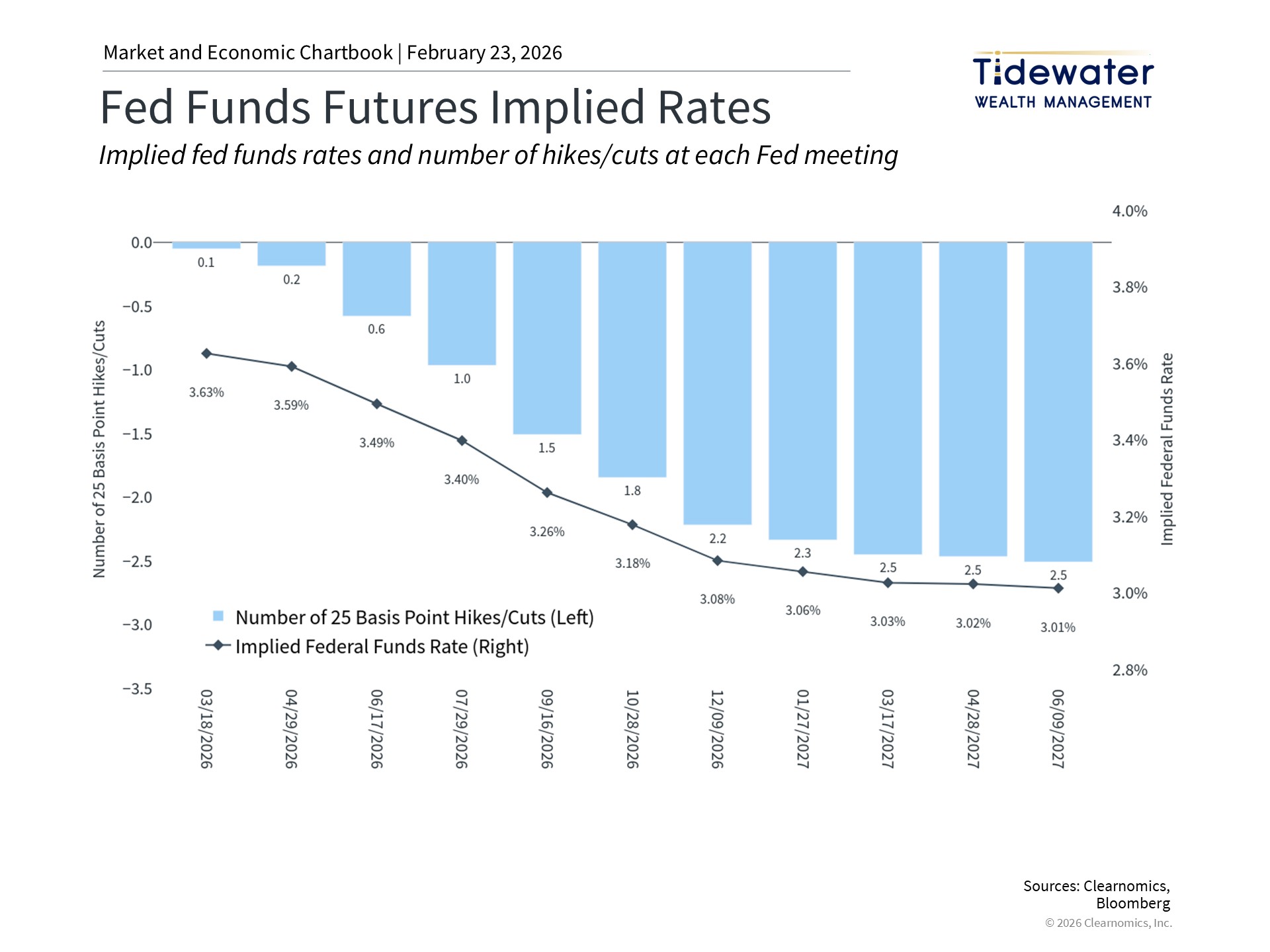
These reports have also shaped expectations for Federal Reserve policy, raising the probability of rate cuts later this year. Market-based measures currently imply at least two rate cuts in 2026, and the prospect of a new Fed chair appointed by President Trump adds further weight to this outlook.
If rates continue to decline, portfolios stand to benefit in several ways: borrowing costs for businesses fall, future corporate earnings become more valuable in present-value terms, and existing bonds tend to appreciate. Even if rates hold steady, bonds continue to offer attractive yields and can serve as a stabilizing force for long-term investors. Meanwhile, corporate earnings growth remains one of the primary drivers supporting the broader market over the past year.
The bottom line? The labor market is cooling but the broader economy is healthy. For investors, this mixed backdrop supports a balanced approach and reinforces the importance of long-term thinking when it comes to portfolios and financial plans.
Advisory services provided by NewEdge Advisors, LLC, as a registered investment adviser.