


Over a decade ago, venture capitalist Marc Andreessen declared that "software is eating the world" predicting that digital automation would transform every possible service. His insight proved prescient as cloud computing and digital platforms revolutionized industries and
consumer behavior. For investors today, understanding these patterns matters more than ever amid recent market turbulence.
AI now represents the latest chapter in this ongoing digital revolution. As markets grapple with its implications across sectors and the broader economy, looking back at previous technological shifts offers valuable perspective for long-term investors navigating current uncertainties.
Innovation brings both opportunities and challenges
Recent market swings in technology stocks highlight the difficulty of forecasting how transformative trends unfold. When Anthropic unveiled new automation capabilities that could replace specialized software in legal and financial research, investors reconsidered traditional software company valuations. Major technology firms reporting over $100 billion in quarterly AI infrastructure spending also faced scrutiny about return on investment.
This volatility echoed the "DeepSeek moment" from January 2025, when a Chinese firm claimed to build AI models far more cheaply than expected. In both instances, markets quickly reassessed and then recovered, demonstrating why maintaining long-term focus matters as sentiment oscillates between innovation's promise and disruption's risks.
Historical patterns provide context
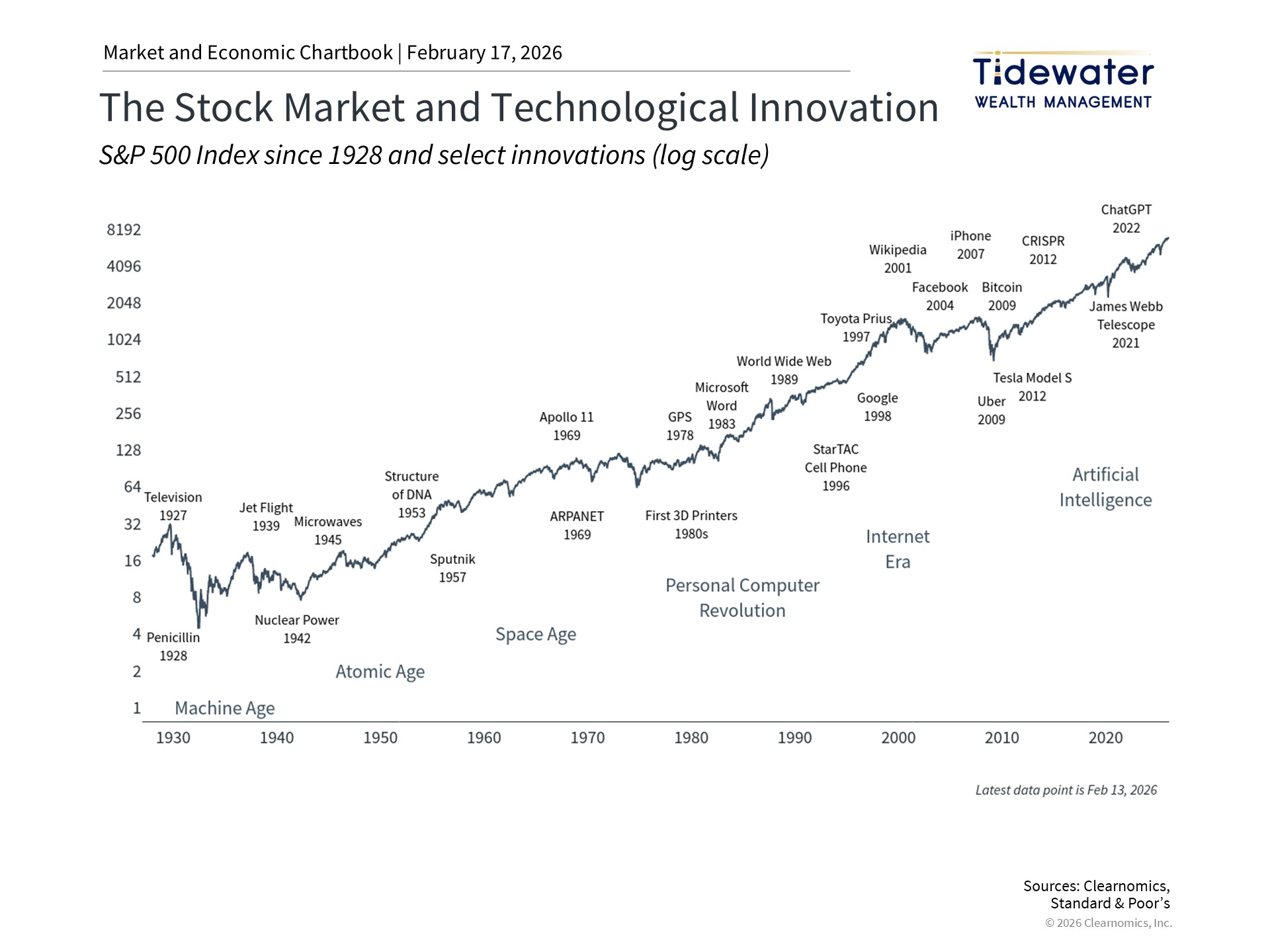
Current AI uncertainty feels unique, but technological disruptions have historically followed predictable cycles. Software evolved from boxed products installed on single computers to internet-enabled mobile platforms that now underpin how we work, shop, and communicate. Each innovation wave requires markets to distinguish between old and new economy participants.
While AI may reshape service creation itself, even revolutionary technologies don't eliminate the need for specialized expertise. AI systems will continue requiring quality data, reliable platforms, and domain knowledge. The companies delivering these capabilities may change, but fundamental needs persist. Progress may be slower than some predictions suggest, yet what AI already achieves is reshaping investor expectations significantly.
Employment trends add complexity
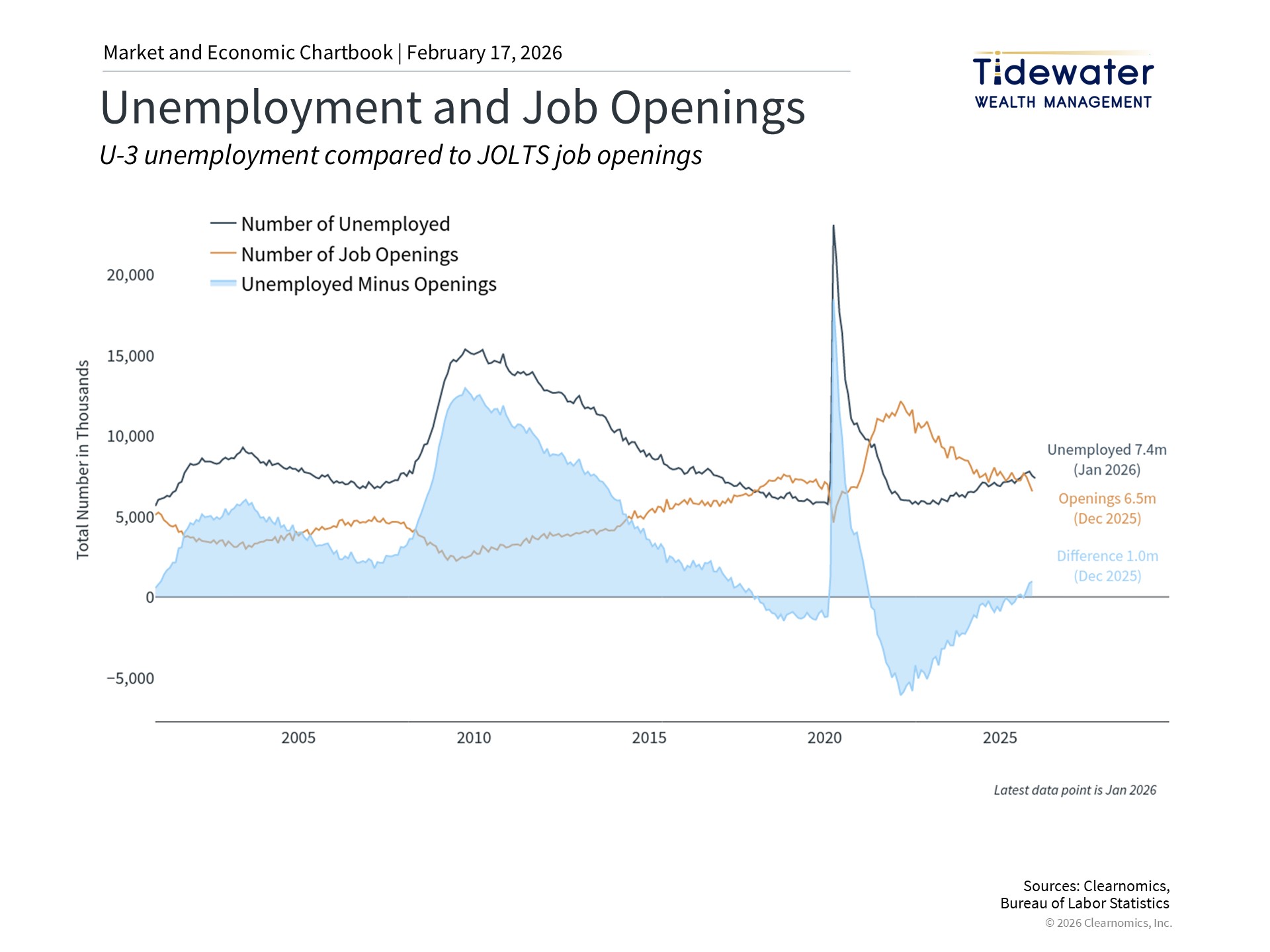
The labor market has softened since mid-2025, with job openings falling to their lowest level since 2020. The ratio dropped from over two openings per job seeker at its peak to less than one, with approximately 6.5 million openings for 7.5 million unemployed individuals. January job cuts reached 108,435, up 118% year-over-year and the highest for that month since 2009.
While no direct evidence links these cuts to AI, the trends affect economic outlooks. Historical technological waves ultimately created more jobs than they eliminated, though transition periods can be challenging. Other economic indicators remain healthy, including consumer spending supported by near-record household wealth and inflation below 3%, suggesting continued growth potential.
Portfolio implications for investors
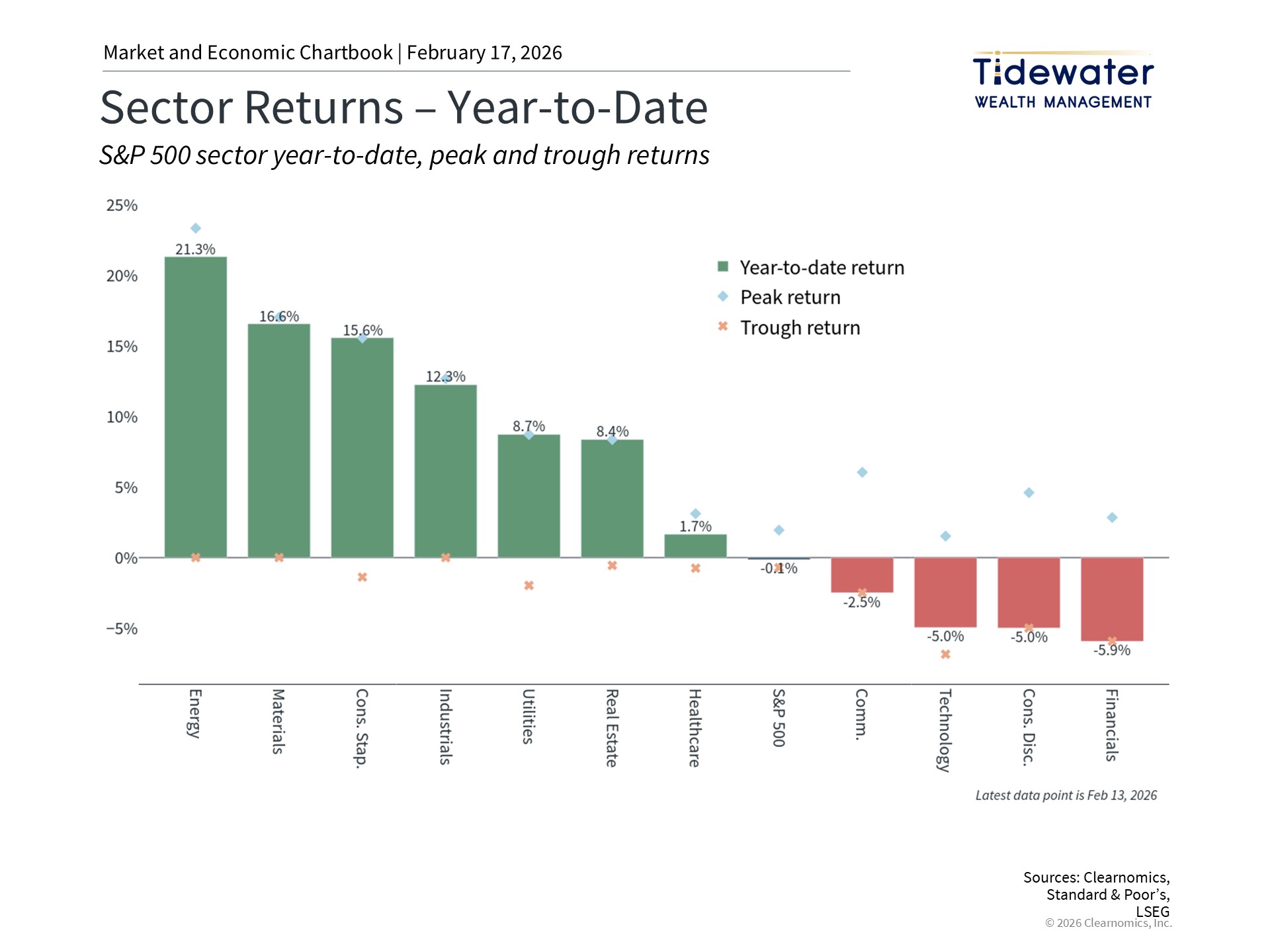
Recent volatility reinforces that asset allocation matters more than any single trend. Information Technology and Communication Services sectors, despite strong recent performance, experience swings as expectations shift. These sectors remain sensitive to interest rates and Federal Reserve uncertainty, explaining why groups like the Magnificent 7 can struggle despite years of outperformance.
With the S&P 500's price-to-earnings ratio near elevated levels, investors are rotating toward Consumer Staples, Energy, Materials, and Industrials, suggesting markets are finding value beyond AI. Cryptocurrencies have also pulled back significantly, with Bitcoin falling 50% before partially recovering, highlighting their portfolio volatility and the importance of thoughtful allocation over market timing.
Today's AI developments should be viewed within the broader market and economic context. If history guides us, markets will both over- and underreact to these changes short-term. Investors who remain patient and properly positioned will be best prepared to reach their financial objectives.
The bottom line? AI is prompting reassessment of individual stocks and sectors, but core investing principles endure. Aligning your portfolio with long-term financial goals remains the most effective approach during periods of rapid transformation.