


The S&P 500 recently crossed 7,500 for the first time, reaching yet another milestone in a year filled with record highs. This is encouraging news for investors, especially since multiple sectors have played a role in driving the rally. These positive trends have also sparked renewed interest in IPOs (initial public offerings, which is when a private company sells shares to the public for the first time), particularly those connected to artificial intelligence, after a stretch of relatively few new companies going public.
This is all happening even as concerns about inflation, high oil prices, and an unresolved potential peace deal in Iran continue to linger. Unlike the stock market, these challenges have put pressure on the bond market (where investors lend money to governments or companies in exchange for regular interest payments), pushing long-term interest rates higher. The 30-year U.S. Treasury yield, for example, briefly touched a nearly 20-year high before easing back toward 5%. Because headlines like these can create uncertainty, maintaining a balanced perspective on your investments is more important than ever.
Technology stocks continue to support market performance
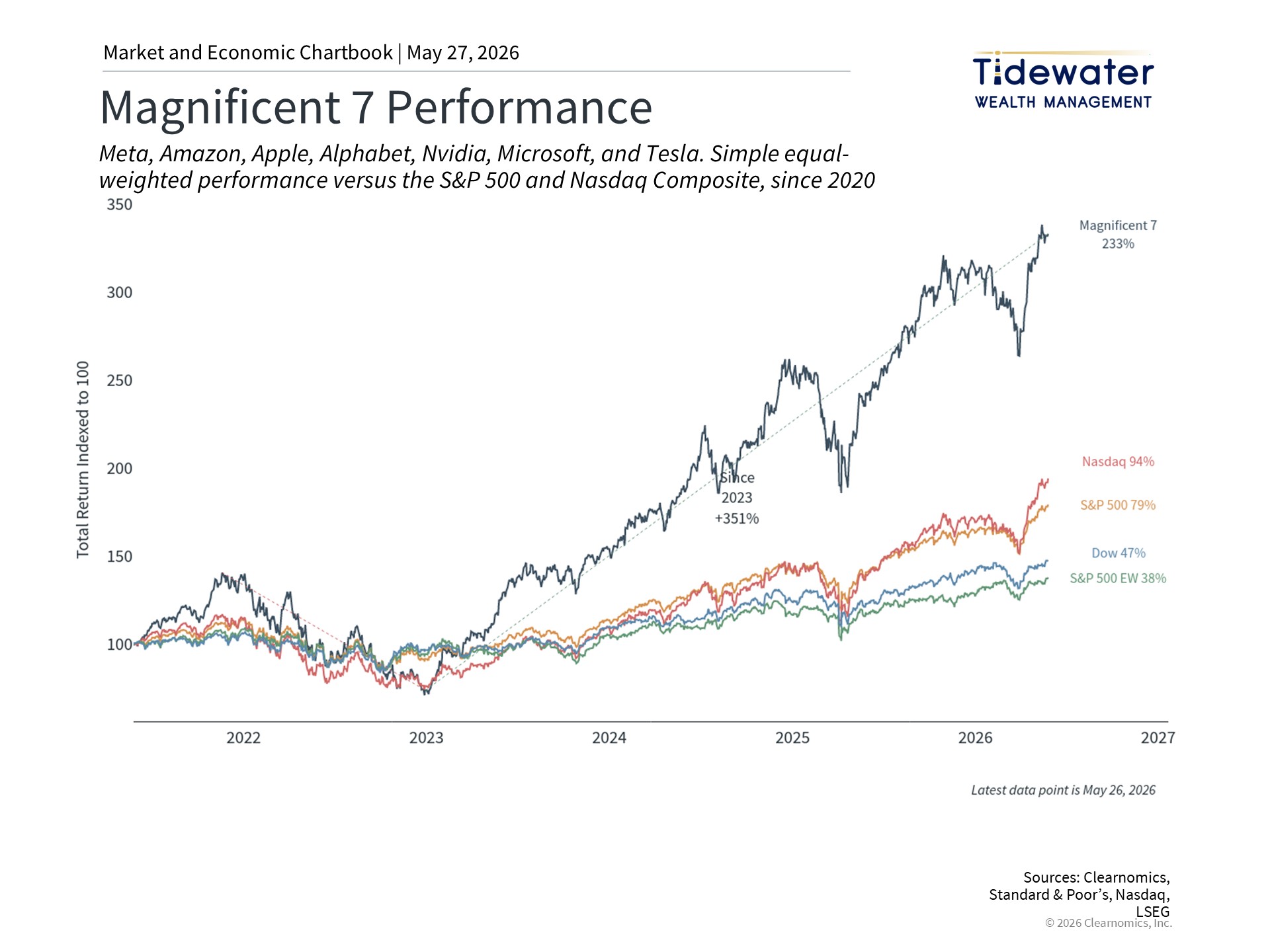
Although the energy sector has been leading the market, technology-related stocks have also added to portfolio returns this year. The Magnificent 7, which includes Apple, Microsoft, Nvidia, Amazon, Alphabet, Meta, and Tesla, now makes up roughly 35% of the S&P 500. This highlights how important it is to think carefully about how a portfolio is built, since some investors may not realize just how much of their money is concentrated in these individual companies.
What has kept the market rally going is not just optimism, but also solid business results. Earnings growth (the increase in company profits over time) for S&P 500 companies has been running well above its historical average, and many large companies have continued to report better-than-expected profits. Current expert estimates suggest that the Information Technology and Communication Services sectors could grow earnings by 35.8% and 17.3%, respectively, over the next year.1 Other sectors, including Materials and Energy, are also expected to see above-average growth.
That said, stock prices have risen alongside these positive results, making valuations higher. Valuation refers to how expensive a stock is relative to the profits a company earns. The S&P 500 forward price-to-earnings ratio, which compares a stock's price to its expected future earnings, currently sits near 21x, above the historical average of 16x. Technology stocks specifically trade at a forward P/E of around 24x.2 While higher valuations do not necessarily mean the market will fall soon, they are an important factor for long-term investors to consider when deciding how to divide their money across different types of investments. Spreading investments across sectors, company sizes, and investment styles can help manage risk while still taking advantage of market gains.
IPO activity is returning to public markets
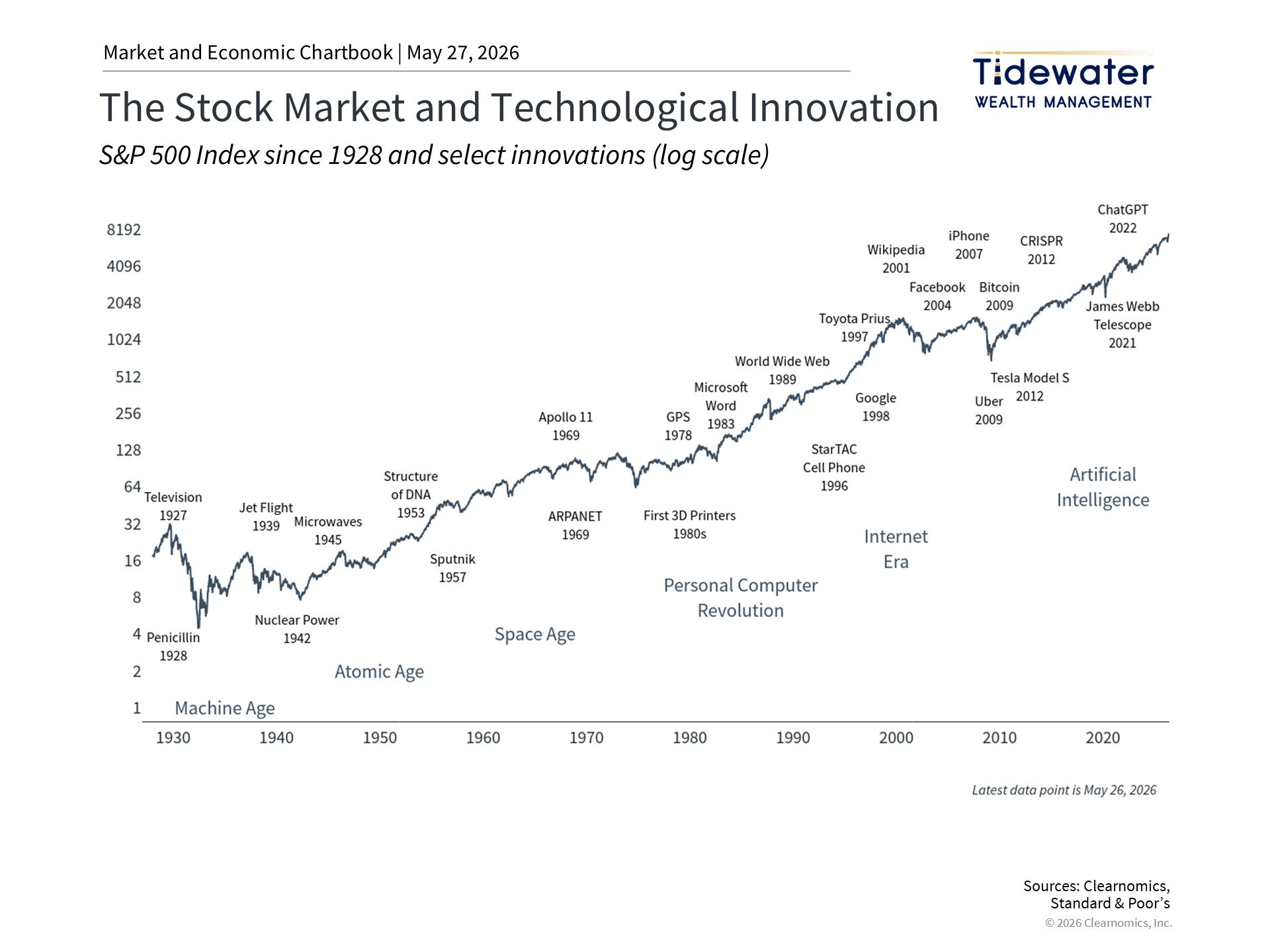
The stock market is always changing. Existing companies can be bought out, combined with others, or sometimes go out of business entirely. At the same time, new companies can join major stock exchanges through a process called an initial public offering, or IPO, which is when a private company offers shares of itself to the general public for the first time.
This is one reason why the range of companies available to investors today looks very different from even ten years ago. For example, the FT Wilshire 5000 index was originally designed to track roughly 5,000 publicly traded U.S. companies, but today it contains only about 3,400 companies.3 This reflects a long-term trend of businesses choosing to stay private for longer periods before going public.
Recently, a number of well-known companies have been reported as considering public offerings, including SpaceX, Anthropic, OpenAI, and others.4 Many of these are large businesses that have grown mainly through venture capital and private investment, rather than through public stock markets. From that perspective, these potential IPOs are a positive development because they would make shares in these companies available to a wider group of investors. Stock market indexes automatically add new public companies as they grow, meaning that long-term investors gain exposure to successful IPOs over time without needing to buy shares at the time of the initial offering.
Of course, IPOs tend to generate a lot of excitement and media attention, and some investors naturally wonder whether getting in early could lead to quick gains. However, this is not always the case. It is often large institutional investors (such as banks and funds) and company insiders who participate in the IPO itself, and many of them have already been invested for years before the public offering. Additionally, company insiders are typically subject to lock-up periods, commonly 180 days, during which they are not allowed to sell their shares. When these periods end, the additional selling can put downward pressure on the stock price, sometimes catching newer investors off guard.
IPO activity tends to come in waves, usually picking up during strong economic periods when there is plenty of investment capital and market confidence is high. The dot-com boom of the late 1990s is perhaps the most well-known example, but there have been many other periods as well. For instance, the market recovery following the pandemic saw a surge in Special Purpose Acquisition Company (SPAC) activity, which is an alternative way for some companies to go public. That wave proved to be short-lived, which is a reminder of the value of keeping a longer-term perspective.
Long-term interest rates have remained elevated
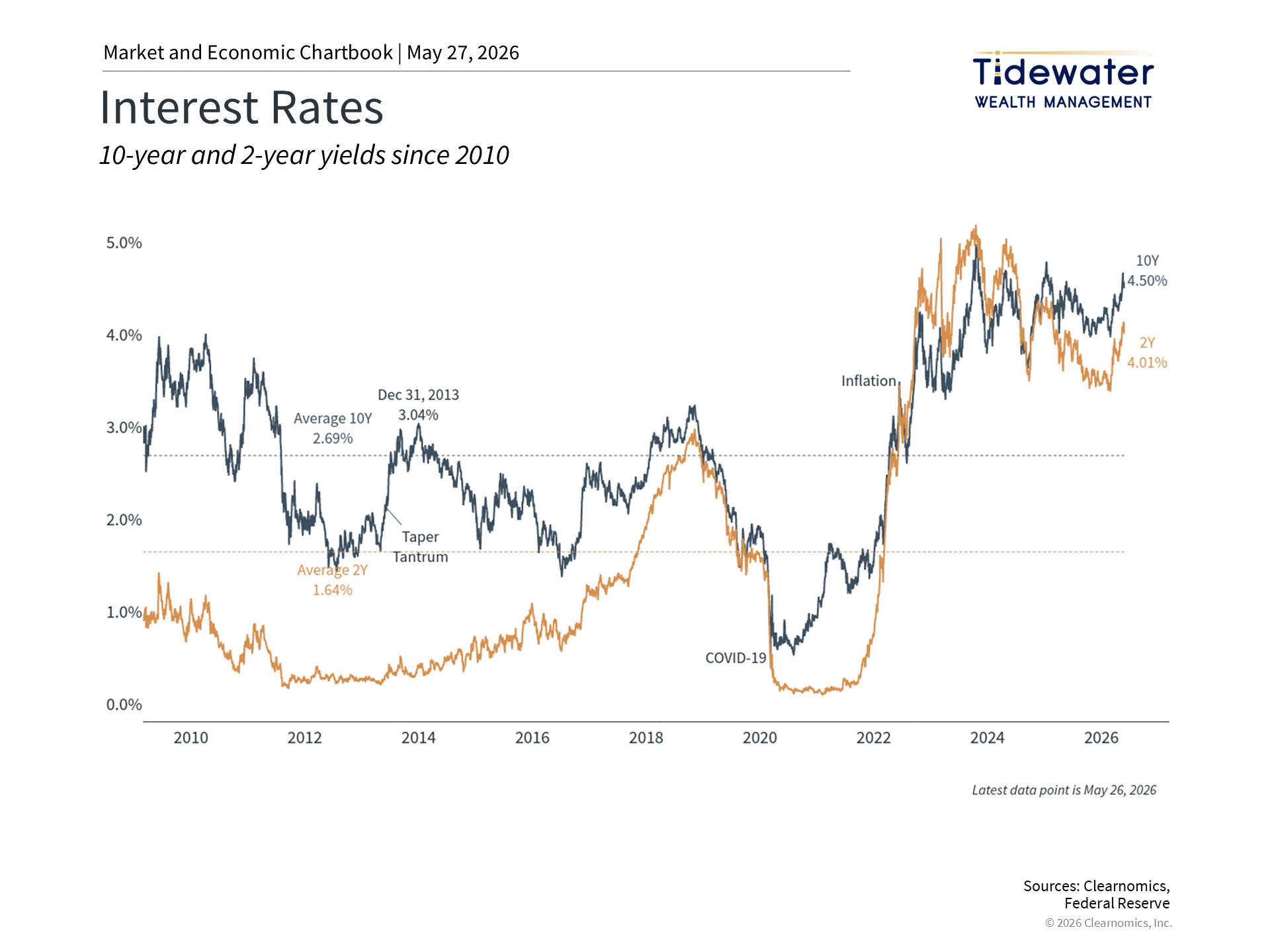
While the stock market has been reaching new highs, long-term interest rates have also been climbing. This is largely driven by ongoing inflation concerns, which complicate the path forward for Federal Reserve (the Fed) policy over the next year. The Fed is the central bank of the United States and sets short-term interest rates to help manage the economy. Technology stocks tend to be sensitive to interest rates and inflation because these factors affect the value placed on future company profits. This is part of why tech stocks struggled in 2022 when interest rates rose sharply, and then recovered as inflation came back down in the years that followed.
Beyond the technology sector, higher interest rates have broad effects across the economy. Mortgage rates have moved up, with the 30-year fixed rate now around 6.5%, which is above the long-term average of 6.02% since 1990. This makes it more expensive to buy a home, which affects housing affordability and the broader real estate market. Higher rates also raise borrowing costs for businesses and can reduce the value placed on future earnings, which may weigh on stock prices, especially for growth-oriented companies that rely heavily on profits expected far into the future.
On the other hand, higher interest rates mean that bonds are now offering more meaningful income than they have in many years. Investment grade corporate bonds (bonds issued by financially stable companies) yield 5.3%, compared to a long-term average of 3.8%. U.S. Treasury bonds yield 4.4%, well above their historical average of 2.2%.5 For investors, this creates more attractive opportunities in fixed income (bonds and similar investments), which can play a more meaningful role in a well-rounded portfolio going forward.
The bottom line? While the stock market has reached new milestones this year, rising interest rates serve as a reminder that the broader economic environment may present future challenges. For long-term investors, the best approach is to maintain a balanced portfolio that can benefit from market growth as well as higher interest rates.
References
1. Clearnomics research and LSEG data as of May 20, 2026
2. Ibid.
3. https://cdn.prod.website-files.com/63e3e50fdce0bcaff7861530/6965694be133b820fb1f390d_FT%20Wilshire%205000%20Index%20Series%20Factsheet%20v2%20-%20Dec%202025.pdf
4. https://www.wsj.com/topics/subject/initial-public-offerings-ipos
5. Bloomberg U.S. Corporate Investment Grade and Bloomberg U.S. Treasury Index yields, as of May 22, 2026
Index Descriptions
S&P 500
The Standard & Poor's 500 Index is a capitalization-weighted index of 500 stocks designed to measure performance of the broad domestic economy through changes in the aggregate market value of 500 stocks representing all major industries.
The modern design of the S&P 500 stock index was first launched in 1957. Performance prior to 1957 incorporates the performance of the predecessor index, the S&P 90.
NASDAQ
The NASDAQ Composite Index measures all NASDAQ domestic and non-U.S. based common stocks listed on The NASDAQ Stock Market. The market value, the last sale price multiplied by total shares outstanding, is calculated throughout the trading day, and is related to the total value of the Index.