


The baseball player Yogi Berra once said that "a nickel ain't worth a dime anymore." With inflation still elevated, many investors and consumers may be feeling this way as well. Everyday costs remain high due to energy prices, and short-term interest rates have dropped over the past two years.
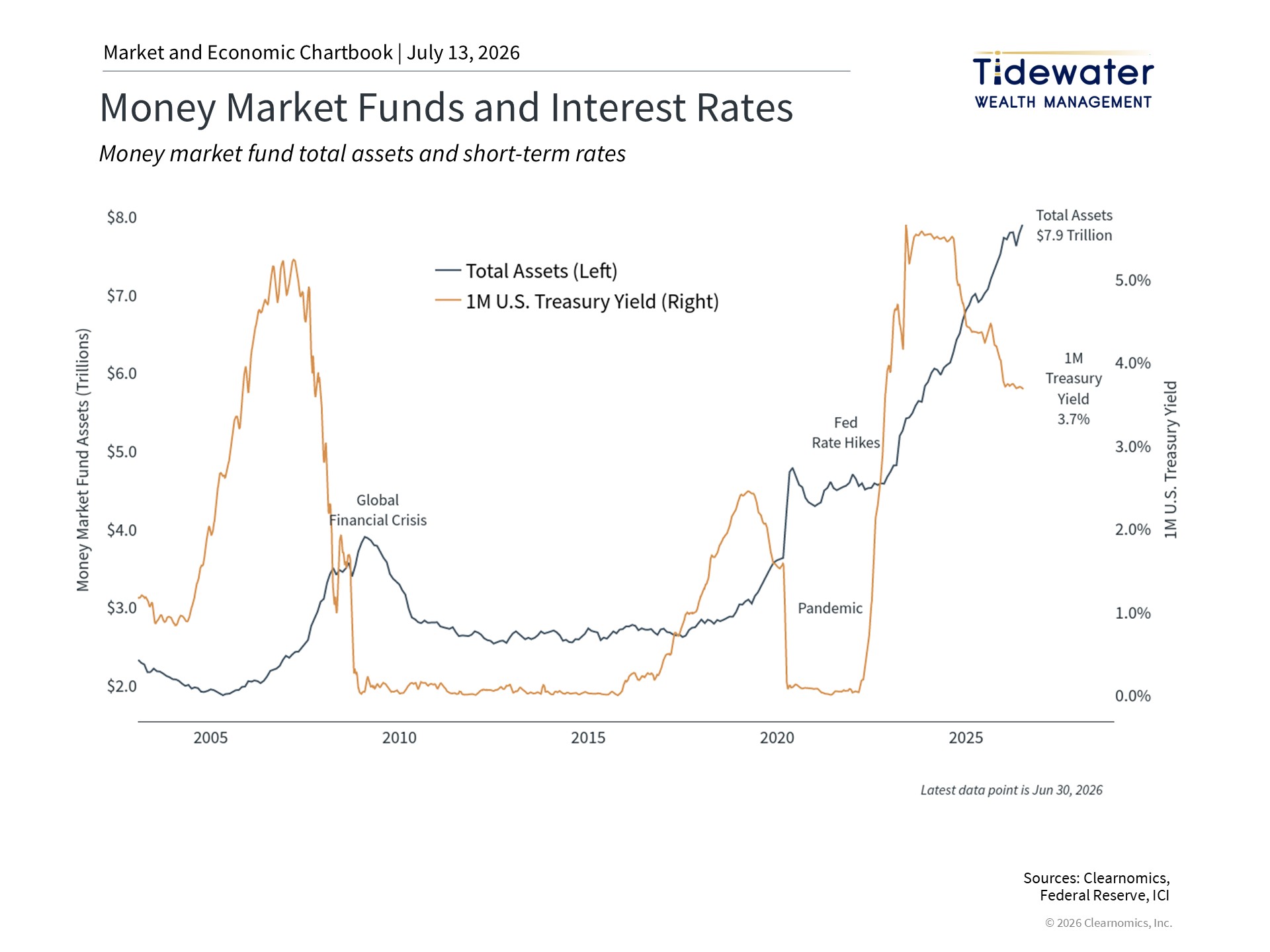
This situation means that investors who keep a large portion of their savings in cash are watching their money lose value in two ways: prices are rising, and the return on cash is falling. Money market fund assets (these are funds that hold short-term, low-risk investments and act like a savings account) are near record highs at $7.9 trillion, which suggests that many investors may be holding more cash than their financial plans actually require.1 So what should investors understand about the role of cash in their portfolios today?
Managing cash requires careful planning
Cash serves many purposes in everyday life and in a financial plan, which makes this topic more layered than it might first appear. Holding too much cash, however, comes with real long-term costs that are easy to miss. Cash feels safe, especially when stock prices are moving up and down every day. But history shows that keeping too much money in cash can slow the growth of wealth over time, because cash does not grow or compound the way stocks, bonds, and other investments do.
In investing and financial planning, the word "cash" usually refers to any savings that can be accessed quickly and easily. Common examples include savings accounts, money market funds, and certificates of deposit (CDs), which are savings accounts that hold money for a fixed period in exchange for a set interest rate. These tools serve real purposes: covering near-term expenses, building an emergency fund, saving for a home down payment, or setting aside money for tuition. All of these are valid and important reasons to hold cash.
The real question is not whether to hold cash, but how much makes sense given a person's goals, time horizon, and overall portfolio. Holding too much cash is sometimes called having "cash on the sidelines," meaning it is sitting idle rather than growing, paying dividends (a share of a company's profits paid to investors), or earning bond interest payments called coupons.
As the chart below shows, money market fund assets remain at record levels after rising alongside interest rates a few years ago. Higher short-term interest rates can look attractive, especially when the stock market is volatile. But because these rates are short-term, they are not locked in for long, which creates what investors call "reinvestment risk." This means that when a short-term investment matures, the money must be reinvested, often at a lower rate. To keep up with inflation and meet financial goals, this cash needs to be put to work in the right kinds of investments.
This is especially important today, since short-term rates have already declined. Investors who shifted to cash not only face lower yields now, but most likely also missed a significant portion of the broader market gains over the past few years.
Inflation quietly erodes the value of cash
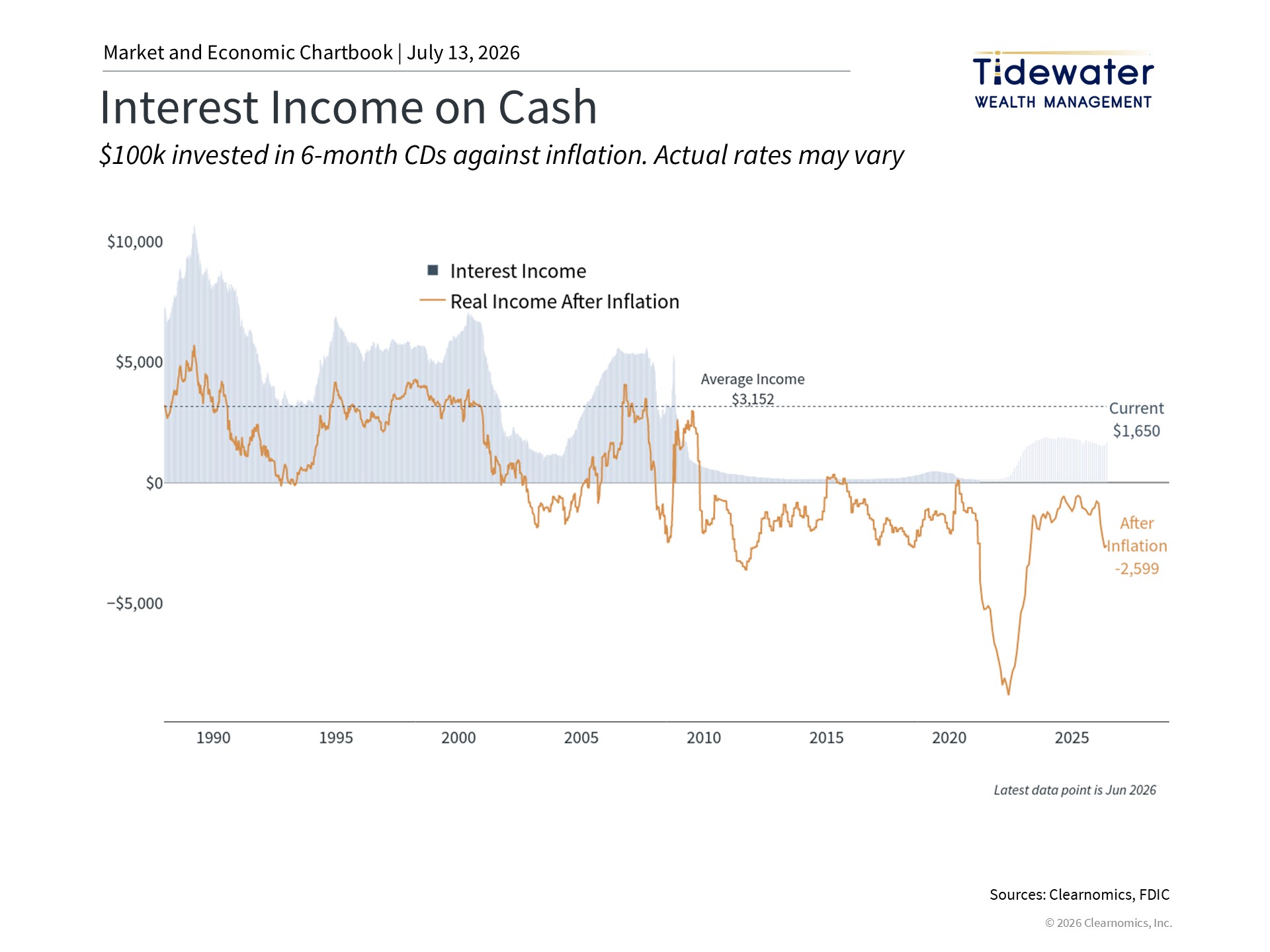
A common misconception is that cash is completely risk-free. While the dollar amount in a bank account does not fluctuate the way stock prices do, the true value of that money can still fall. This is because the value of cash is really about what it can buy, and inflation (the general rise in prices over time) gradually reduces that purchasing power. This effect may seem small in any given year, but it adds up over time unless interest payments or investment gains are there to offset it.
As the chart above shows, the inflation-adjusted return on cash, measured using current CD rates from the FDIC, has been negative for most of the past two decades.2 In other words, even when cash appeared to be earning some interest, inflation was rising faster. With headline inflation currently at 4.2% and the one-month Treasury yield (the return on very short-term U.S. government debt) at 3.7%, the real return on cash (meaning the return after subtracting inflation) remains negative today by many measures.3
Money market funds, savings accounts, and short-term CDs also need to be renewed regularly when they mature. This reinvestment risk must be actively managed and depends on changing market and economic conditions. As a result, many of the same factors that affect stocks and bonds also influence the returns available on cash.
Stocks and bonds support long-term growth
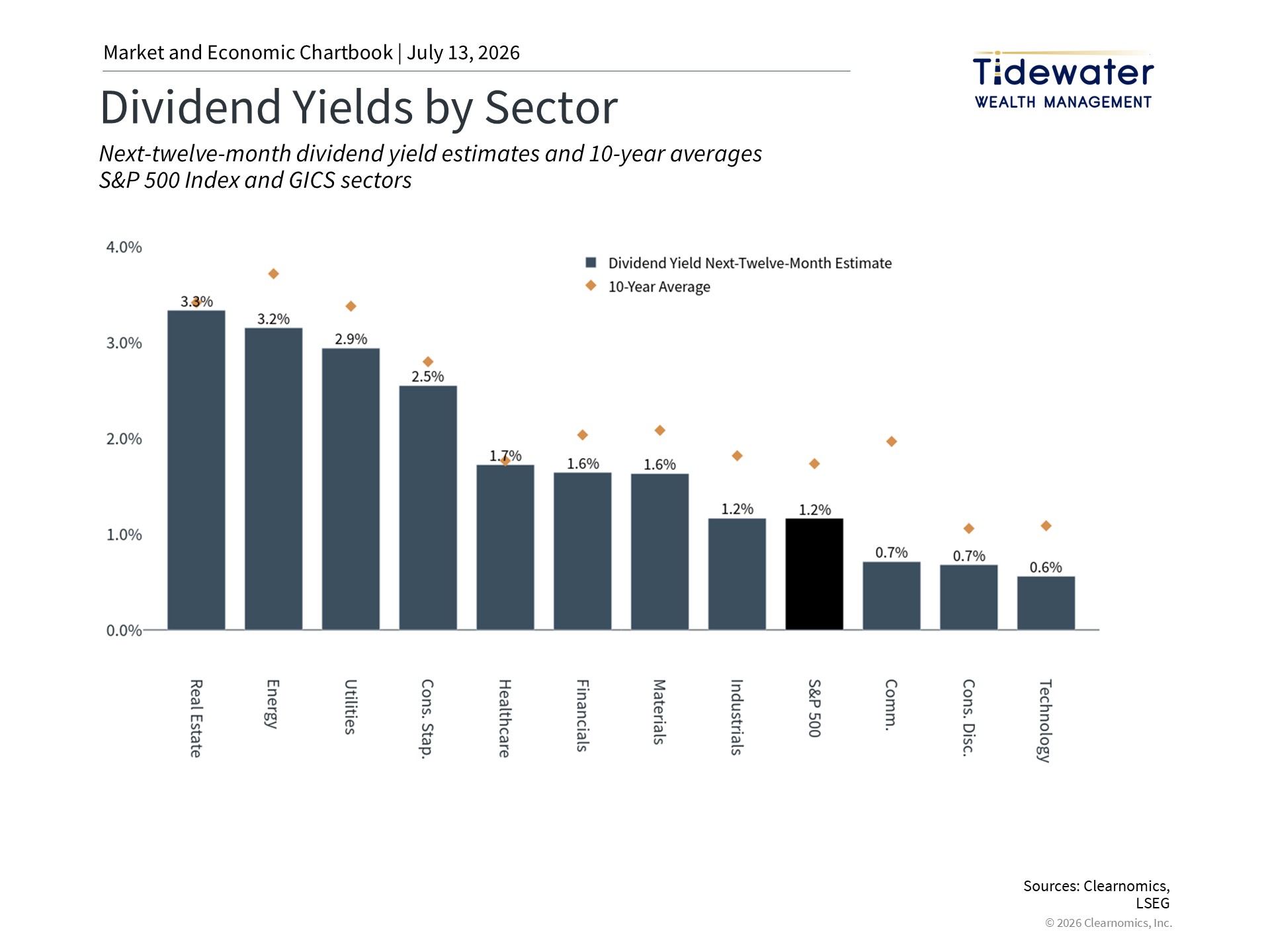
Stocks and bonds have traditionally formed the foundation of investment portfolios because they can provide both long-term growth and income. Dividend-paying stocks, for example, can offer regular income along with the potential for the stock's price to rise over time. While dividends are not guaranteed the way bond interest payments are, certain sectors of the S&P 500 (a widely followed index of 500 large U.S. companies) such as Real Estate, Energy, and Utilities currently offer yields above 3%, which is comparable to many short-term cash and bond instruments.
Choosing bonds with longer maturities (meaning the bond takes longer to repay the original investment) can also lead to more attractive interest rates. For example, the 2-year Treasury yield is currently around 4.2%, which is both meaningfully higher than short-term cash yields and matches the latest inflation rate. Investment grade corporate bonds (bonds issued by financially stable companies) currently yield 5.3% on average, compared to a historical average of 3.9%. The Bloomberg U.S. Aggregate Bond Index, which tracks a broad mix of U.S. bonds, yields 4.8%, more than one and a half times its average since 2009. Unlike cash, bonds can also gain in value, and they can help balance the overall risk of a portfolio.
What history ultimately shows is that a portfolio with the right combination of investments can not only stay ahead of inflation over time, but can grow in a way that supports long-term financial goals. This is not an argument against holding cash altogether, but rather a reminder that cash in a portfolio should serve specific, near-term needs. For investors who have built up extra cash over the past few years, putting it to work thoughtfully in a broader portfolio is an important step.
The bottom line? Cash plays an important role in financial planning, but holding too much comes with long-term trade-offs. Staying invested in a diversified portfolio of stocks and bonds remains the best way to work toward long-term financial goals.
References
1. https://www.ici.org/research/stats/mmf
2. https://www.fdic.gov/national-rates-and-rate-caps
3. https://home.treasury.gov/policy-issues/financing-the-government/interest-rate-statistics
Index Descriptions
S&P 500
The Standard & Poor's 500 Index is a capitalization-weighted index of 500 stocks designed to measure performance of the broad domestic economy through changes in the aggregate market value of 500 stocks representing all major industries.
Bloomberg US Aggregate Bond Index
The Bloomberg U.S. Aggregate Bond Index is an index of the U.S. investment-grade fixed-rate bond market, including both government and corporate bonds.